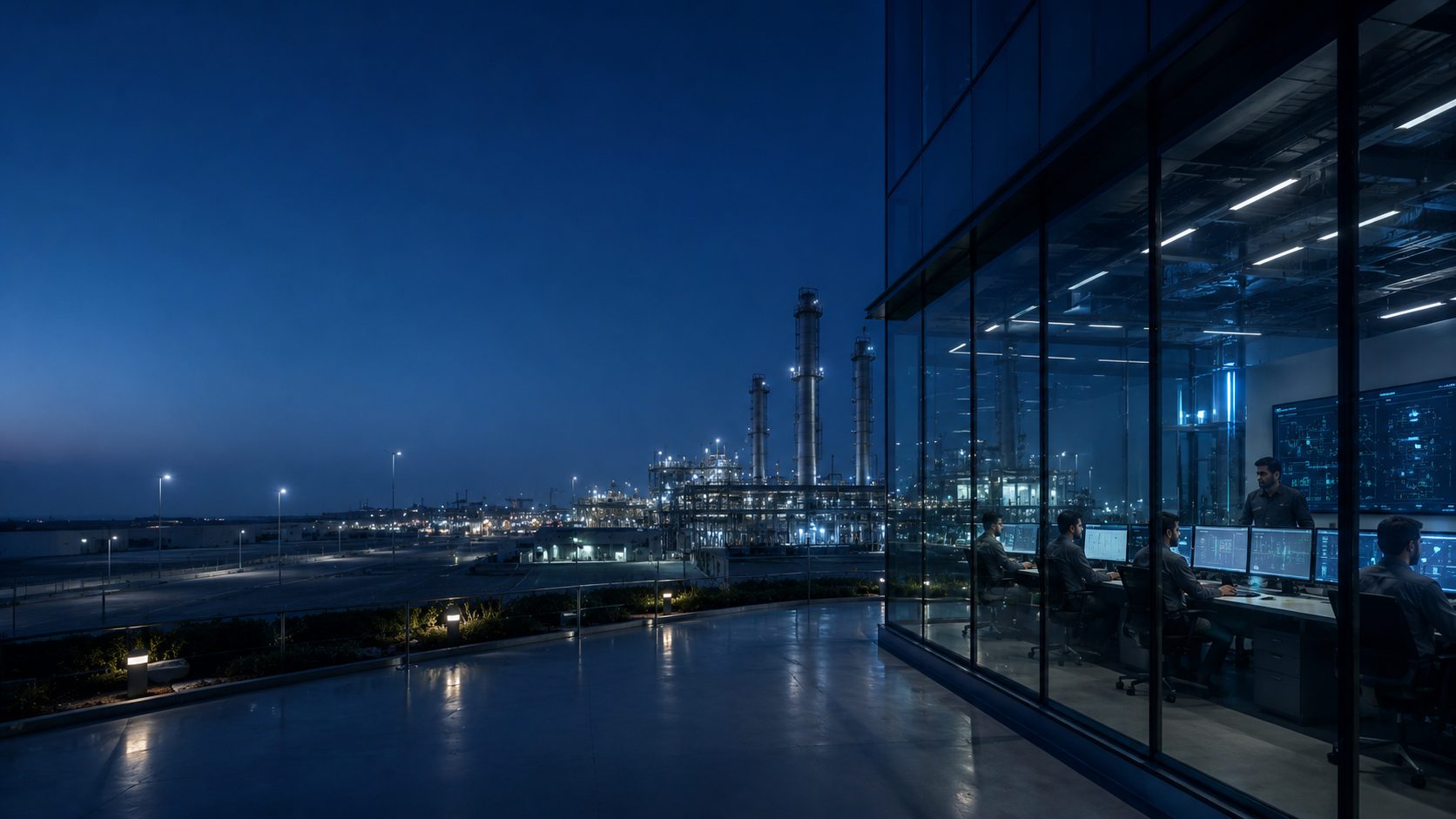
ISO management system implementation, certification readiness, and integration across environmental, energy, occupational health & safety, quality, and GHG quantification standards. Built so the system runs in daily operation, not only at audit time.
ISO 14001, ISO 50001, ISO 45001 and ISO 14064 implementation and certification readiness — plus standalone energy audits under EN 16247 / ISO 50002 — for industrial and corporate operations across the GCC.
ISO standards & energy audits we deliver
Implemented to operate inside your business, not to live as a binder on a shelf until the next surveillance audit.
-
01 ISO 14001 — Environmental
Environmental management system. Most common starting point. Aspects-and-impacts register, legal compliance, operational controls, monitoring & measurement, internal audit, management review.
-
02 ISO 50001 — Energy Management
Energy management system. Energy review, baseline establishment, energy performance indicators (EnPIs), action plans, and a continuous improvement cycle. Central to decarbonisation — pairs directly with the energy audits alongside.
-
03 Energy Audits (EN 16247 / ISO 50002)
Standalone site-level energy audits under EN 16247 / ISO 50002 — energy review, significant-energy-use (SEU) analysis, EnPI baselining, and a prioritised set of efficiency measures with expected savings and payback. Delivered independently to cut energy cost and Scope 1/2 emissions, or as the foundation for ISO 50001 certification.
-
04 ISO 45001 — Occupational H&S
OH&S management. Risk-based hazard identification, worker consultation & participation, contractor management, emergency preparedness.
-
05 ISO 9001 — Quality
Quality management system. Process approach, risk-based thinking, customer focus, leadership commitment.
-
06 ISO 14064 — GHG Quantification
GHG inventory quantification (Part 1), project quantification (Part 2), and verification (Part 3). Common for assurance-ready GHG inventory and carbon project work.
-
07 ISO 55001 — Asset Management
Asset management system (ISO 55001:2024). Lifecycle asset management — value, performance and reliability across acquisition, operation, maintenance and disposal — now aligned with digitalisation and ESG.
-
08 ISO 22301 — Business Continuity
Business continuity management system (ISO 22301). Business impact analysis, continuity strategy and plans, crisis management and communication, and exercising — building operational resilience to cyber, supply-chain and geopolitical disruption.
-
09 Social Audit (SA8000 / SMETA / amfori)
Supply-chain social audits to SA8000, SMETA (Sedex) and amfori BSCI — verifying labour, health-and-safety and ethical conditions for buyers and suppliers facing due-diligence requirements.
-
010 E-Management Systems (e-QMS / e-EMS)
Digital, integrated management systems — electronic QMS, EMS, EnMS and HSE (e-QMS / e-EMS) — replacing paper and binders with real-time, audit-ready dashboards and continuous assurance.
Six-phase implementation
-
01 Gap analysis
Current-state assessment vs. standard requirements. Output: prioritised gap register, effort estimate, certification timeline.
-
02 Documentation design
Manual, procedures, process maps, forms, and registers — written to be used, not just to pass audit.
-
03 Implementation rollout
Training, communication, operational integration, document control deployment.
-
04 Internal audit
Full internal audit cycle, finding remediation, management review.
-
05 Certification audit support
Stage 1 & 2 audit coordination with the CB (TÜV, BSI, DNV, Bureau Veritas, etc), pre-audit readiness, finding response.
-
06 Sustainment cycle
Year-1 surveillance audit support, continual improvement, integrated management review.
We are not a certification body. We implement; the certification body audits. We work comfortably alongside any major CB and have no commercial relationship with any of them — which means our advice is genuinely independent.
ISO Implementation — questions we hear most
What is ISO 14001 and which organisations need it?
ISO 14001 is the international standard for an environmental management system (EMS), built around an aspects-and-impacts register, legal compliance, operational controls, monitoring, internal audit, and management review. It is the most common starting point for industrial and corporate operations in the GCC managing environmental risk or facing client and regulatory expectations. ESGweise implements it to operate inside your business rather than to live as a binder on a shelf.
How much does ISO 14001 certification cost in the UAE?
There are two cost components: the certification body's audit fees (Stage 1 and Stage 2, then annual surveillance), which scale with the number of sites, headcount, and the complexity of your operations; and the implementation effort to build the management system before the audit. Smaller single-site operations sit at the lower end, while multi-site industrial groups cost more. ESGweise gives you a fixed-scope estimate at the gap-analysis stage — covering both the implementation work and the expected certification-body fees — so there are no surprises, and we keep the system lean so audit days stay proportionate.
What is the difference between ISO 14001, 50001, and 45001?
They cover different management systems: ISO 14001 is environmental, ISO 50001 is energy management (central to decarbonisation, with energy audits under EN 16247 / ISO 50002), and ISO 45001 is occupational health and safety. Many organisations integrate them into a single management system where it makes operational sense. ESGweise implements them individually or as an integrated system, alongside ISO 9001 quality and ISO 14064 GHG quantification.
How long does ISO 14001 implementation and certification take?
ESGweise runs a six-phase engagement — gap analysis, documentation design, implementation rollout, internal audit, certification audit support, and a sustainment cycle. Overall timelines depend on the standard, site complexity, and how mature your current processes are, but the gap analysis produces a prioritised register, effort estimate, and certification timeline up front. We coordinate the Stage 1 and Stage 2 audits with your chosen certification body.
Do you issue the ISO certificate?
No. We are not a certification body — we implement the management system, and an accredited certification body audits and issues the certificate. We have no commercial relationship with any certification body, so there is no referral incentive in our advice. We work alongside any major certification body and prepare you for the audit.
How does ISO 50001 support decarbonisation and net-zero goals?
ISO 50001 establishes an energy management system that creates a measured energy baseline, defines energy performance indicators, and drives a continuous improvement cycle — often supported by site-level energy audits under EN 16247 or ISO 50002. Because reducing energy use directly cuts Scope 1 and 2 emissions, it is a practical engine for delivering on net-zero commitments rather than just reporting them. ESGweise pairs ISO 50001 with ISO 14064 GHG quantification for an evidence-backed decarbonisation programme.
Do you conduct energy audits, and how do they relate to ISO 50001?
Yes. We conduct site-level energy audits under EN 16247 and ISO 50002 — a structured energy review that maps significant energy uses, establishes a measured baseline and energy performance indicators (EnPIs), and produces a prioritised set of efficiency measures with expected savings and payback. An energy audit can be delivered as a standalone diagnostic to cut energy cost and Scope 1 and 2 emissions, or as the foundation for ISO 50001 certification. For many GCC industrial and commercial sites it is the fastest, lowest-capital route to measurable energy and carbon reduction.
Thirty minutes. We figure out if there's a fit.
We don't pitch on the call. We listen, ask sharp questions, and tell you honestly whether iso implementation is what you need — or what else might be.
Speak with our team